Embracing Everyone Through Innovative Designs
  • Universal Design
  • Terminologies
  • Principles
  • Examples

The Basic Principle of Universal Design - Simple and Intuitive Use(part 3)

10/1/2011

0 Comments

 
According to the Center for Universal Design,  headquartered in North Carolina State University, UD has seven basic principles.
Picture

Simple and Intuitive Use

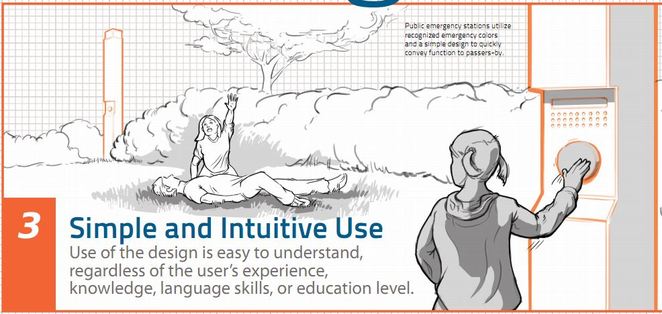
The design and devise is user friendly. It is easy to understand, uses a standard way of presentation, and does not require a special skills, level of education , language and experience. In the picture, the fire alarm uses a push button that is standard and color red. Even a child can understand that it is a panic button.
0 Comments

The Basic Principle of Universal Design - Perceptible Information(part 4)

9/22/2011

0 Comments

 
According to the Center for Universal Design,  headquartered in North Carolina State University, UD has seven basic principles.
Picture

Perceptible Information

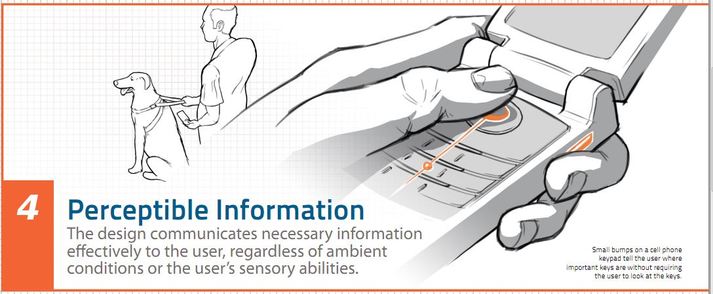
The design should be able to show potential users the most important information that will lead to the effective use of the product, device or environment. Information should be made accessible regardless of the sensory capabilities of the user. 
In the picture above a blind individual can use the cellphone's keypad because of the bump on the pad that will enable the user without looking at the keypad. 


See 5. Tolerance for Errors
0 Comments

The Basic Principle of Universal Design - Tolerance for Errors (part 5)

9/20/2011

0 Comments

 
According to the Center for Universal Design,  headquartered in North Carolina State University, UD has seven basic principles.

Tolerance for Errors

Picture


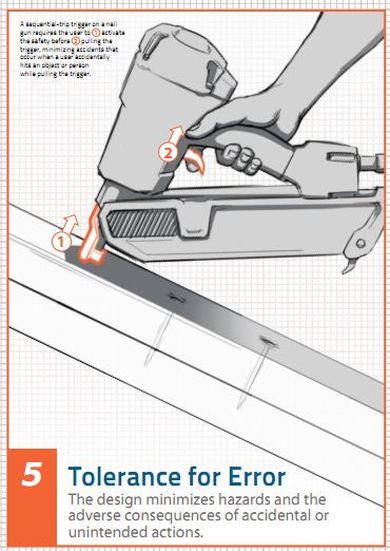
The design has a high tolerance for mistakes. The idea behind this principle is safety precaution. It minimizes hazards and the adverse consequences of accidental or unintended actions. The design has a built in safety measures in terms of careless or forgetfulness.
In the picture a nail gun requires a to activate the safety button before pulling the trigger thereby removing the risk of accidents while the gun is pointed somewhere else. 


See 6. Low Physical Effort.


0 Comments

The Basic Principle of Universal Design - Low Physical Effort (part 6)

9/20/2011

0 Comments

 
According to the Center for Universal Design,  headquartered in North Carolina State University, UD has seven basic principles.

Low Physical Effort

Picture

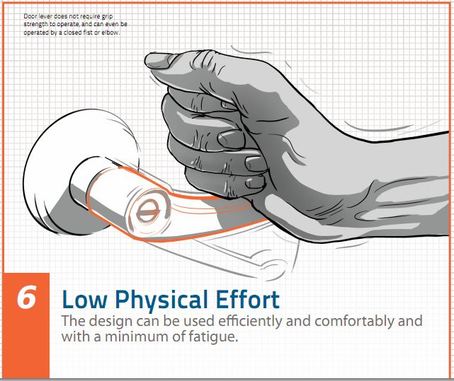
The design should bear in mind that the user needs to exert the most minimum effort for a device to function. This principle allows both the strong and the weak in stature to enjoy the benefit of a Universal Design. Comfort and ease of use is the driving force behind this principle.

In the picture a door level is presented that does not require grip strength. A close fist or an elbow can offer the door.


See 7. Size and Space 


0 Comments

The Basic Principle of Universal Design - Space (part 7)

9/19/2011

0 Comments

 
According to the Center for Universal Design,  headquartered in North Carolina State University, UD has seven basic principles.
Picture

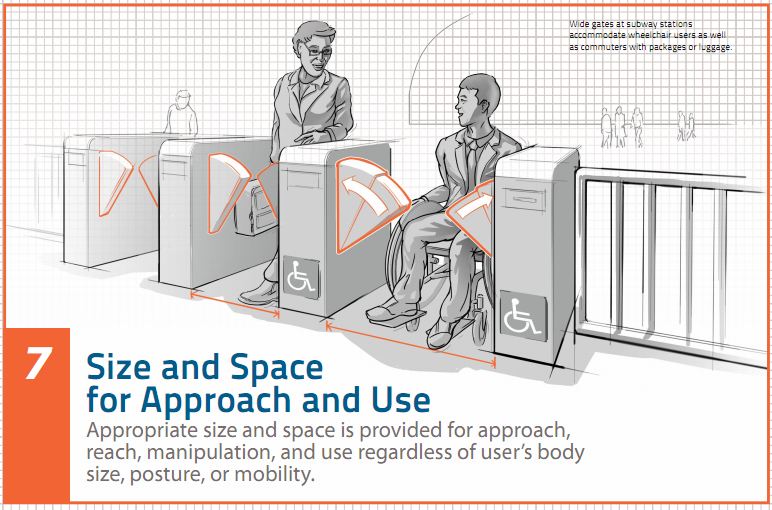
7. Size and Space for Approach and Use

The size and space should not be constraint. Ease of access should be the desired goal targeting space provided for approach, reach, controls and manipulation regardless of  the body size, posture or mobility of user. In this picture  subway gates is easily accessible by a person in a wheelchair or with a person carrying huge baggage or even with an obese commuter.
0 Comments

The Basic Principle of Universal Design - part2

9/19/2011

0 Comments

 
According to the Center for Universal Design,  headquartered in North Carolina State University, UD has seven basic principles

Flexibility in Use

Picture


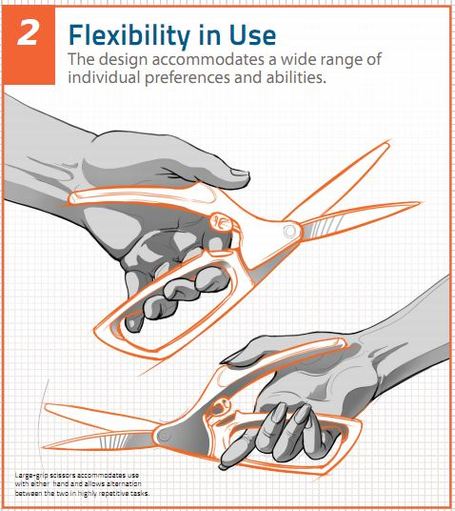
The design should take into consideration the abilities and preferences. 

In the picture, a pair of scissor with a large grip handles can be used by any one whether he is left or right handed without any inconvenience. 


0 Comments

The Basic Principles of Universal Design

9/19/2011

0 Comments

 
According to the Center for Universal Design,  headquartered in North Carolina State University, UD has seven basic principles

Equitable Use

. 
Picture


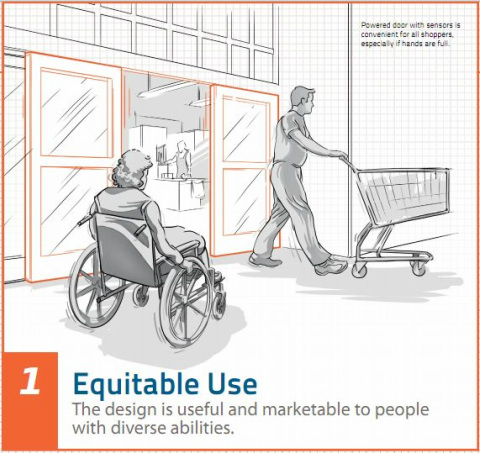
Everyone should be the beneficiary of the design irregardless of age, status and ability. In the picture powered doors that close and open on sensors can be used both by a wheelchair bound person and  by someone that has his hands full.


Continue with the second Principle: 
Flexibility in Use

0 Comments

    Links

    walk in tubs

    Archives

    October 2011
    September 2011

    Universal Design

    All
    Accessibility
    Architecture
    Design
    Disability
    Mobility

    RSS Feed

Powered by Create your own unique website with customizable templates.